The alarm sounds and before your eyes are properly open, your hand is already out, patting the bedside table. You check the time, then the weather, then a message that could have waited until nine. Somewhere in there a headline tightens your jaw. By the time your feet hit the floor you have already been somewhere — inside someone else's inbox, someone else's argument — and you have not yet been in your own kitchen.
A phone-free first hour is not a detox challenge or a personality overhaul. It is a small piece of ordering: the day starts with your attention pointed at your own life, and the notifications arrive later, when you have some say in the matter. Here is how to begin without pretending you will suddenly become a person who journals at dawn.
It does not mean no technology, and it does not mean an hour of meditation. It means the phone stays out of your hands until you have done a few ordinary things: stood up, drunk something, looked out of a window, got dressed. Text messages, email, news, social feeds, even the weather app — all of it can wait for the end of that window.
Most people do better starting at ten or fifteen minutes rather than sixty. Ten honest minutes is a real change if you currently check your phone within seconds of waking. The hour is the direction of travel, not the entry fee.
Morning decisions are expensive. At 6:40 a.m. you are not a strategist; you are a warm body running on habit. So make the decisions while you are still reasonably sharp, ideally before dinner.
Relying on self-control at dawn is a bad plan. Relying on distance works much better, because distance does not need to be motivated. Every extra step between you and the screen is a step where you get to change your mind.
Useful forms of friction: the phone charges in another room overnight. It sits face down in a drawer. It is set to silent or airplane mode until you decide otherwise. If you need the phone nearby for genuine reasons — you are on call, a family member is unwell, you have small children and a monitor — keep the ringer on loud and leave the phone across the room, so you answer calls but do not fall into a feed.
This is the objection that ends most attempts, and it is worth answering plainly. Almost nothing that arrives by message between seven and eight requires you specifically and immediately. Set up your phone so that calls ring through and notifications do not, tell the two or three people who might genuinely need you, and then let the rest wait. If you have caregiving responsibilities or a job with real on-call duties, adjust the plan rather than abandoning it — the goal is attention, not rule-following.
An empty hour invites the phone back in. You do not need a routine with a name. You need two or three things you actually like doing, in an order you do not have to think about.
Some options that work for ordinary people with ordinary kitchens:
Pick two. One that involves your body and one that involves your attention. The window-and-kettle combination is underrated because it requires no equipment and no discipline beyond standing there.
Trying to go from zero to sixty minutes in one morning usually ends with a phone in bed and a vague sense of failure. A gentler ladder:
Notice the pattern: the phone is not banned, it is scheduled. When you do pick it up, pick it up deliberately, from a standing position, once. The second and third pickups are the ones that eat the morning.
One morning you will wake late, the alarm clock will have been left in the other room, and you will find yourself reading a comment thread at 6:15 with no memory of reaching for the phone. Nothing has gone wrong. A slip is information: it usually means the friction was too low or the night before was too chaotic.
Repair it the same day, not on Monday. Put the phone back on the kitchen counter that evening, set the alarm clock, write the note again. If mornings reliably bring a knot of dread that the phone seems to soothe, that is worth talking through with someone qualified — a GP or a therapist — rather than treating as a habit problem alone.
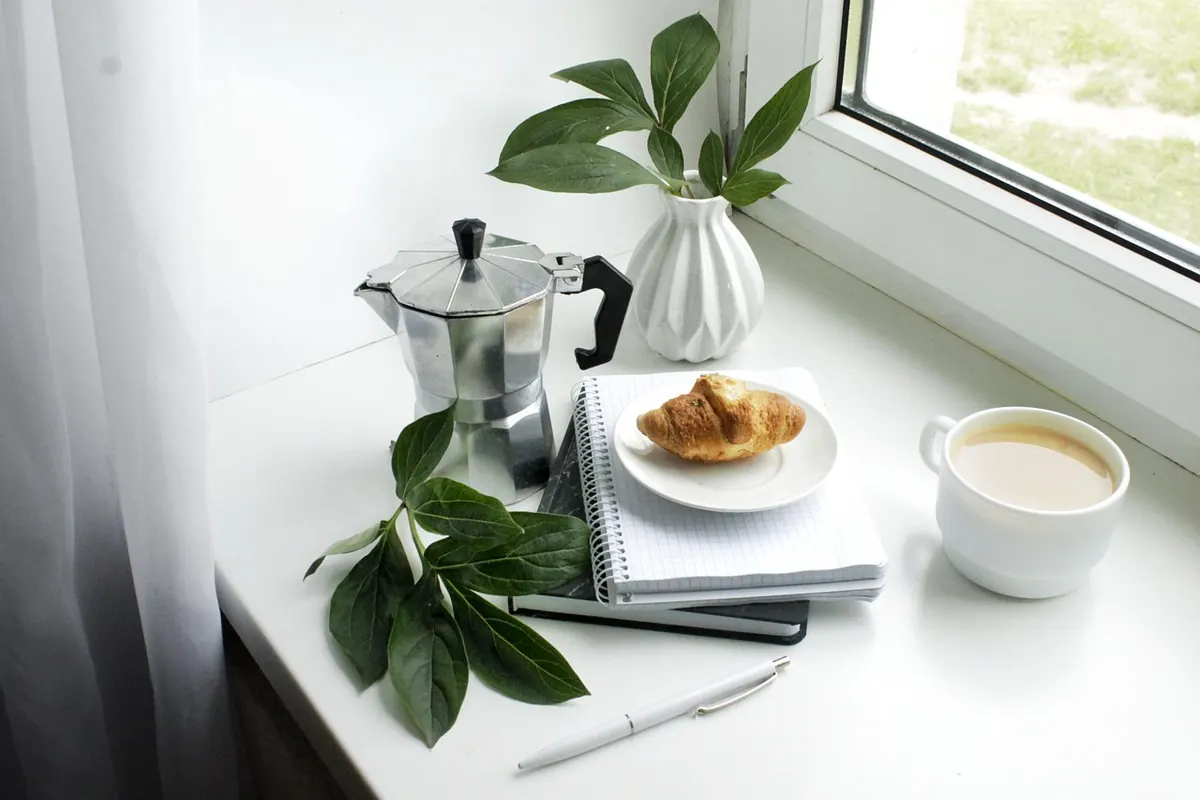
Tonight, before you sit down for the evening: plug the phone in somewhere that is not your bedroom, set a separate alarm, and leave a mug, a notebook and a pen where you will see them first thing. Tomorrow, when you wake, walk to the kettle before you walk to the phone. Stand at the window while the water boils. Drink the first cup sitting down.
That is the whole practice for day one. Do it four mornings in a row and you will notice something quietly useful: the day starts with your own thoughts rather than a queue of other people's, and the queue, it turns out, is perfectly capable of waiting until eight.
Photo: nad_dyagileva / Pixabay